The Convenience Equation
It's the formula we unconsciously apply to decide whether the friction of doing something the "right way" is worth avoiding
There's a quiet trade happening in our lives, one we make constantly without really thinking about it. We sacrifice things we should care about—privacy, ownership, control, independence—in exchange for convenience. The question isn't whether we make this trade, but rather: what conditions make us willing to make it? And nowhere is this more relevant than right now, as we adopt artificial intelligence and other powerful technologies at breathtaking speed.
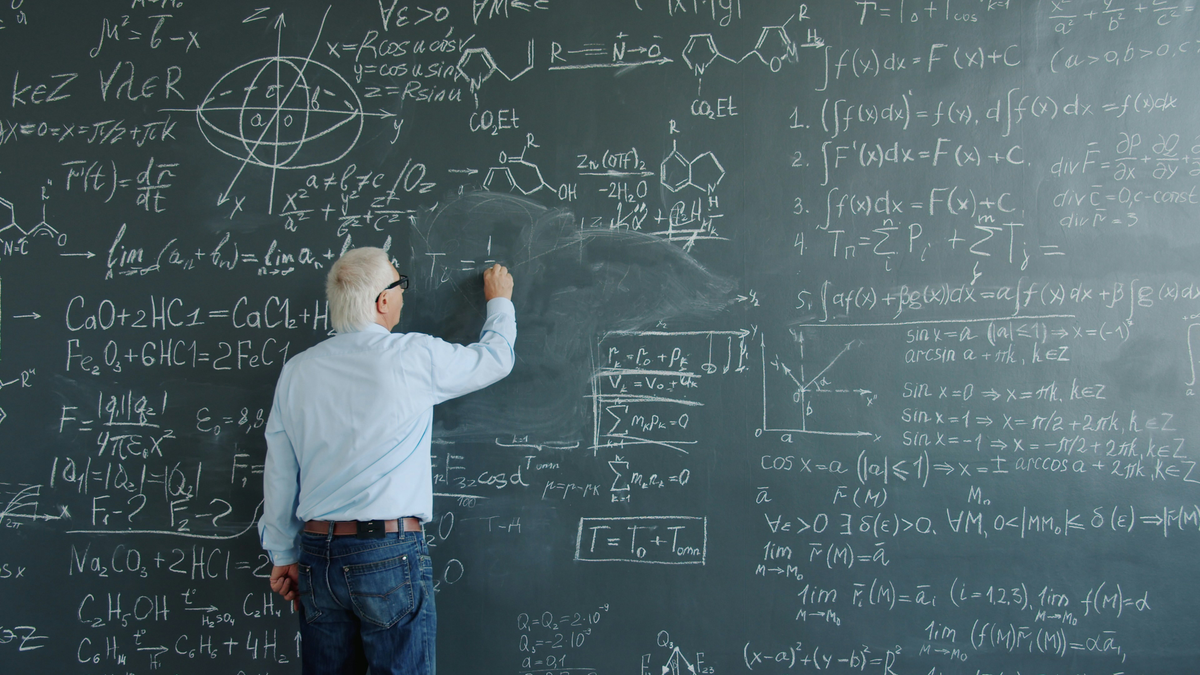
I call this The Convenience Equation. It's the formula we unconsciously apply to decide whether the friction of doing something the "right way" is worth avoiding, and whether we're willing to accept the risks that come with taking the easier path.
How the Equation Works
The core premise is simple: as perceived convenience increases, our tolerance for risk increases.
When something is incredibly convenient—effortless, seamless, always available—we become willing to overlook consequences we'd normally consider unacceptable. We accept terms we don't read. We hand over data we wouldn't normally share. We lock ourselves into ecosystems we know reduce our freedom. We do all of this because the convenience is genuinely good, and the risks feel abstract. This is the phenomenon that behavioral economists call "inattention"—when convenience is high enough, people often fail to fully evaluate the costs and risks involved.
This Is Not New
The Convenience Equation isn't a modern invention. It's been operating in the background of human decisions for as long as we've had choices to make. The difference is that we've gotten better at hiding the consequences.
Take automobiles. When cars first appeared, they offered something extraordinary: freedom, speed, independence. The ability to go where you wanted, when you wanted. The convenience was revolutionary. But cars also came with a cost we've quietly accepted for over a century: tens of thousands of deaths every year. In the United States alone, more than 40,000 people die in traffic accidents annually. Millions more are injured.
And yet we drive. We accept this equation—extraordinary convenience in exchange for significant risk of injury or death—as a normal part of life. A teenager loses their driver's license and it feels like a tragedy. We complain about traffic, not about the fundamental bargain that cars represent.
That's the pattern. We wanted the convenience, so we accepted the risk. And now we can't imagine life without it, even knowing the cost.
Consider cloud storage. The convenience is undeniable: your photos, documents, and files accessible from any device, anywhere, anytime. Automatic backups. No thinking required. But the tradeoff is significant. A company owns your data. They can access it. They can lock you out with no warning. They can change their terms whenever they want. Your entire digital life can be erased with one flagged account.
Yet most of us accept this. Why? Because the convenience is so high that the risks feel worth it. Research from Stanford economists shows that this inattention to ongoing costs is quantifiable—companies earn 14 to over 200% more revenue from subscriptions when consumers aren't actively monitoring their spending. We keep paying for things we no longer value simply because the friction of cancelling is higher than the friction of doing nothing.
The same pattern appears with streaming services. Instead of owning music or films, we rent access to rotating catalogues. We lose the ability to own anything, but we gain the ability to listen to almost anything instantly. The convenience is real. The loss of ownership is real. Most of us have decided the tradeoff is worth making.
Or consider social media. The convenience of staying connected to everyone, sharing moments instantly, having a permanent record of your life—these are genuinely valuable. The cost is surveillance, algorithmic control of what you see, data harvesting, and effects on your mental health that we're only beginning to understand. Yet the convenience keeps us there.
But nowhere is the Convenience Equation more active right now than with artificial intelligence. We're adopting AI tools at unprecedented speed—ChatGPT, coding assistants, content generators, AI-powered recommendations—because the convenience is extraordinary. Get answers instantly. Write documents in seconds. Solve problems without friction. The benefits are immediate and tangible. Yet we're accepting this trade while genuinely uncertain about the costs. We don't fully know how our data is used. We don't understand the long-term effects on our thinking and decision-making. We can't predict how AI systems will behave in novel situations. The risks around privacy, bias, accuracy, and dependency are largely unknown—or worse, actively hidden. And yet we use these tools anyway, often multiple times a day, because the convenience is too good to pass up. With AI, we're making the largest convenience tradeoff of our lives, except the equation itself is still being written.
The Breaking Point
The equation holds only as long as convenience remains high and risks remain abstract. When the risks become concrete—when you lose access to your account, when a service shuts down, when your data is breached, when terms change in a way that actually affects you—the equation shifts.
Suddenly, you realize you don't own anything. You discover your digital life is rented from a company that owes you no protection. You find out that the convenience came with vulnerabilities you didn't fully understand.
This is the moment many people have: standing in front of their digital life, realizing how much has been handed over, how fragile it all is. But by then, the convenience has usually made untangling yourself nearly impossible. You're locked in—to the platform, the ecosystem, the service. Leaving would require giving up too much convenience to be practical.
When the immediate benefit is clear and the future downside is fuzzy, convenience wins.
The Uncomfortable Truth
The Convenience Equation isn't really about making a calculated decision. It's about how convenience blinds us to the actual cost of our choices. When something is frictionless enough, we don't think about the tradeoff. We just use it.
And that's the genius of it, from a company's perspective. They make their service so convenient that questioning it feels almost ridiculous. Why would you worry about owning your own files when Google Drive is sitting there, syncing everything automatically? Why stress about privacy when everyone you know is on the same social media platform? Why bother keeping local backups when your subscription service takes care of it all?
The answer to all of those questions is the same: because convenience isn't the only thing that matters. But when the convenience is high enough, it becomes easy to forget that it should be. This is why researchers describe the relationship between users and platforms not as a transaction but as a "pay-for-privacy" model—we pay with our data and freedom, and companies profit from the exchange. What makes this sustainable is that the cost remains hidden while the benefit is immediate and visible.
“I have nothing to hide” is really a convenience claim: I’d rather enjoy the benefits now than spend mental energy on hypothetical risks. It’s also a bet—that the context won’t change, that the data won’t be repurposed, and that the platform’s incentives will remain aligned with mine. But privacy isn’t about hiding; it’s about preserving the ability to choose where information about you belongs. Convenience doesn’t just make sharing easier. It makes oversharing effortless.
Finding Your Own Equation Value
The point of naming this isn't to suggest you should reject convenience. It's to make the equation visible.
When you're considering handing something over—your data, your ownership, your independence—it's worth asking: how much convenience am I actually getting? What risks am I accepting? Would I accept these risks if the convenience were lower? Would I still make this choice if I really thought about it, or am I just going along because it's easy?
For some things, the equation might be worth it. For others, it might not be. But at least you'll be making the decision consciously, rather than defaulting to convenience because it's there.
That's the real power of the equation: not to tell you what to do, but to help you see what you're actually trading away.
Generative AI is the perfect convenience drug for mundane tasks: it drafts, summarizes, formats, and fills blank pages instantly. But the risk isn’t that it fails loudly—it’s that it fails quietly. When the output looks polished, we stop reading carefully. The mistake isn’t the model’s error; it’s the human decision to outsource attention.